Boston Dynamics and the future of Robotics
For decades, the concept of fully autonomous, highly agile robots was confined entirely to the realms of science fiction. However, over the past few years, the engineering pioneers at Boston Dynamics have firmly pulled that futuristic vision into reality, permanently shifting how humanity perceives machine capabilities. Spun out of the Massachusetts Institute of Technology (MIT) in 1992, the engineering firm spent years working on specialized military contracts before capturing global internet stardom with viral videos of their machines running, jumping, and backflipping. By systematically tackling the incredibly complex physics of dynamic balance, spatial awareness, and mobile manipulation, they have laid down the fundamental architectural foundation for a massive impending industrial and societal revolution driven by advanced robotics.
At the center of this robotic vanguard is Atlas, arguably the most advanced bipedal humanoid robot on Earth. Originally developed with a heavy hydraulic system that required intense fluid pressures to move, the iconic platform underwent a radical transformation when Boston Dynamics introduced an all-electric commercial variant. This new iteration utilizes highly advanced, custom-engineered electric actuators that are lighter, tighter, and significantly more efficient than previous tech. Rather than merely mimicking limited human ranges of motion, the electric Atlas features uniquely full 360-degree rotational joints. This allows it to twist, contort, and fold itself into positions that are anatomically impossible for humans, optimizing its efficiency when navigating confined warehouse floors or heavily structured factory settings.
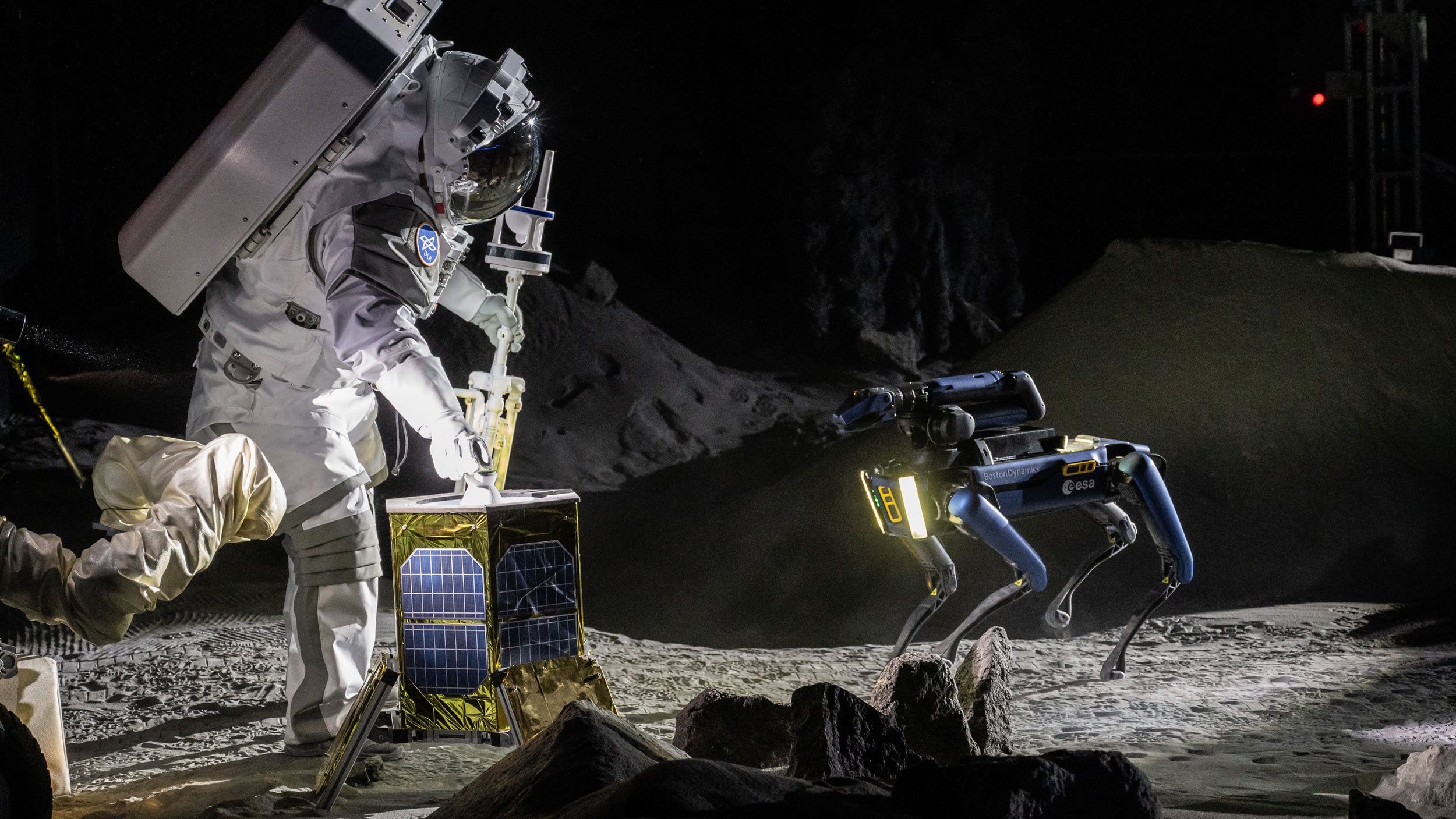
The core genius separating Boston Dynamics from traditional static industrial manufacturing hardware is its masterful execution of dynamic mobility. Traditional automation relies on hardcoded routines where a mechanical arm moves along precise, unmoving coordinate lines. If an unexpected obstacle appears, the machine halts completely. In stark contrast, platforms like Spot, the ubiquitous quadrupedal robotic dog, utilize real-time sensory feedback loops. Packed with comprehensive 360-degree perception cameras, inertial measurement units (IMUs), and advanced terrain-mapping software, Spot continuously calculates the coefficient of friction and ground elevation with every step. This active balancing feedback allows it to confidently navigate slick patches of ice, steep stairwells, and unstable industrial gravel fields without losing its footing.
As these mobility challenges are systematically conquered, the broader conversational focus across the entire robotics ecosystem has shifted toward advanced manipulation and task execution. It is no longer enough for a machine to simply walk from point A to point B; it must perform meaningful, dexterous work once it arrives. This is where specialized platforms like Stretch come into play—a rugged mobile automation unit purpose-built for logistics and supply chain optimization. Utilizing a smart, vacuum-suction gripper array and an integrated perception mast, Stretch works untethered to safely move heavy boxes out of deep transport trucks. By embedding specialized deep-learning machine vision, the robot can identify, analyze, and safely grab an endless variety of packages on the fly, transforming tedious warehouse operations.
This rapid evolution points toward a massive structural paradigm shift in the workforce: the transition of mobile robots from isolated laboratory research novelties into highly integrated, commercial-grade tools. Heavy industries—including oil and gas refineries, dangerous nuclear decommissioning facilities, mining operations, and massive construction zones—are deploying autonomous fleets to handle routine inspections. Sending an agile, sensor-rich robot into toxic gas leaks or high-voltage sub-stations keeps human workers out of harm's way entirely. Instead of replacing laborers, these machines are augmenting workforce efficiency, stepping in to take over the dangerous, dirty, and incredibly dull tasks that human beings should not have to endure.
The long-term trajectory of this technology points directly toward a future defined by general-purpose humanoid companions. As artificial intelligence models continue to merge with advanced physical hardware, robots are quickly evolving past pre-programmed behaviors. Next-generation machines are utilizing large behavioral models to learn complex mechanical tasks simply by watching human demonstrations or practicing via ultra-fast reinforcement simulations. When you pair this adaptable software with the flawless physical agility pioneered by Boston Dynamics, you open the door to highly versatile robotic assistants capable of working seamlessly alongside humans in manufacturing, hospital logistics, emergency disaster rescue, and eventually, daily domestic environments.
Ultimately, the groundbreaking work being done by Boston Dynamics serves as a powerful reminder that we are witnessing the dawn of a brand new era in human engineering. The line between software and physical reality is permanently blurring as machines step off of static production lines to actively navigate our dynamic world. While significant challenges regarding high battery longevity, massive production scale, and intuitive human-robot communication still lie ahead, the rapid evolution of these platforms ensures that the future of robotics will reshape global industry, space exploration, and the very nature of human labor for generations to come.