The Paradox of Progress: Cultural Facts That Defy Common Sense
We live in an era of unprecedented global connectivity, advanced geopolitical mapping, and hyper-sophisticated financial networks. Because we carry the sum of human knowledge in our pockets, we operate under the comforting illusion that we deeply understand the layout of our world, the foods we eat, the money we spend, and the histories of our nations. However, when we strip away the surface level of our shared reality, we uncover a series of structural contradictions that completely defy our standard intuition. The Paradox of Progress: Cultural Facts That Defy Common Sense highlights four mind-boggling anomalies across global agriculture, international geography, modern economics, and national folklore. By examining the hidden truths behind these everyday pillars of humanity and culture, we reveal a global landscape that is far more surprising, fragile, and wonderfully bizarre than it appears.
The first profound contradiction sits directly on the dinner plates of billions of people across the globe. We step into modern supermarkets and marvel at the seemingly endless aisles of diverse food products, exotic fruits, and global ingredients, assuming that human civilization enjoys a highly resilient, diversified agricultural matrix. In reality, the Food and Agriculture Organization (FAO) reveals a terrifyingly narrow systemic bottleneck: an astonishing 75% of the global human diet relies on just 12 plant species and a mere 5 animal species. Just three staple crops—rice, maize, and wheat—provide nearly 60% of all calories consumed by the global population. This extreme lack of biodiversity exposes our modern civilization to immense systemic risks, as a single targeted agricultural plague or dramatic climate shift could effortlessly destabilize the global food supply chain, proving that our illusion of abundance rests on a knife-edge.
While our agricultural systems are unexpectedly narrow, the geopolitical maps of Western Europe hold an equally shocking territorial secret that upends our understanding of geography. If you were to ask any casual trivia enthusiast to name the country that shares France’s longest international land border, they would almost certainly guess Spain, Germany, or perhaps Belgium. However, according to official international borders, France's longest continuous land border is actually shared with Brazil, stretching across an incredible 730 kilometers of dense Amazonian rainforest. This geographical oddity is made possible by French Guiana, an overseas department of France located on the northeastern coast of South America. Because French Guiana is fully integrated into the French Republic, using the Euro and operating under European Union law, the remote jungle border completely eclipses France's domestic borders in Europe, transforming a European power into a literal neighbor of the South American wilderness.
This stark divergence between physical perception and systemic reality amplifies dramatically when we transition from geographical lines to the global financial markets. When we think of money, our minds naturally visualize physical assets: crisp banknotes tucked into leather wallets, metallic coins clinking together, or massive vaults stacked with solid gold bullion. Yet, macroeconomists estimate that over 92% of all global currency exists strictly in digital form, as invisible electronic data entries stored within the decentralized server networks of major central banks and financial institutions. The physical cash we interact with daily accounts for a microscopic fraction of the global money supply. Modern wealth is almost entirely a shared hallucination of ledger entries, traveling across the world at the speed of light through fiber-optic cables, completely untethered from the material world.
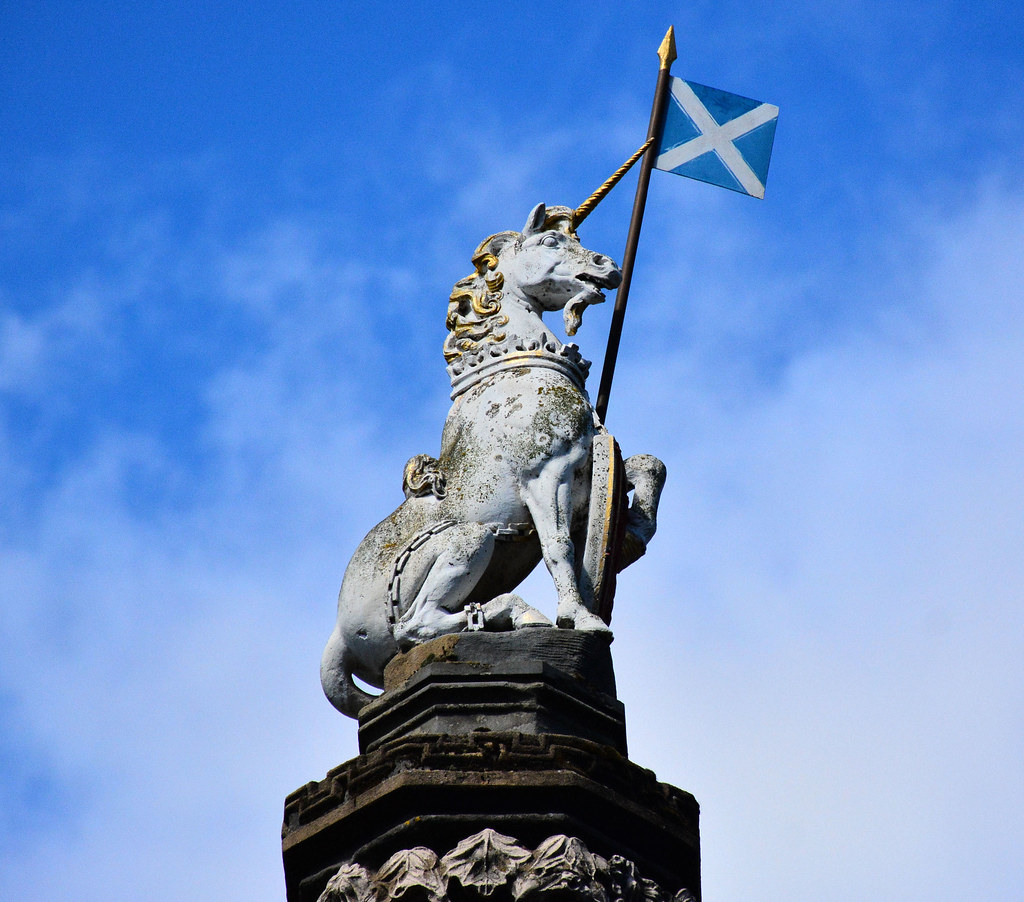
As we pivot from the hyper-rational, digital algorithms of modern banking toward the traditional roots of national identity, we encounter an anomaly that swaps cold statistics for pure mythology. Scotland is a nation globally renowned for its rugged Highlands, fiercely practical engineering feats, and a history steeped in grim, battle-hardened realism. Yet, despite this austere cultural reputation, Scotland's official national animal is none other than the mythical unicorn. Chosen in the 12th century by King William I to adorn the Scottish royal coat of arms, the unicorn was not selected merely as a whimsical fairytale prop. In ancient heraldry, the unicorn was celebrated as a symbol of absolute purity, untameable wildness, and an unmatched, fierce independence—a creature so proudly untamable that it would actively choose to die in battle rather than surrender to captivity, perfectly mirroring Scotland's historical refusal to be subjugated.
The profound overarching significance of these four disparate facts forces us to confront a deeper philosophical truth about the modern human condition. They demonstrate that the systems guiding our lives—whether it is the food keeping us alive, the borders defining our nations, the currency powering our economies, or the myths shaping our identities—are not necessarily built on obvious or natural logical foundations. Instead, they are the highly complex products of historical accidents, radical political choices, and evolutionary compromises. Recognizing these hidden patterns allows us to break free from our daily autopilot routines, transforming our perspective so we can view the world around us with a sharper sense of analytical scrutiny and profound cultural appreciation.
As human society continues to accelerate into an increasingly digital, hyper-globalized future, the gaps between traditional common sense and systemic realities will only continue to widen. The algorithms managing our attention spans, the synthetic meats emerging in our laboratories, and the shifting lines of geopolitical alliances will continue to generate anomalies that challenge our foundational understandings of normalcy. By compiling, analyzing, and documenting these cultural paradoxes, we equip ourselves to better navigate the shifting currents of modern civilization. Staying curious about the invisible oddities hidden in plain sight ensures that we remain proactive, enlightened citizens of a deeply complex, endlessly fascinating world that constantly keeps us guessing.