Universal Frequencies: The Hidden Symphony of Reality
The universe, when stripped down to its most fundamental architecture, is not a collection of static matter, but a dynamic tapestry of vibrations. From the cosmic expansions of deep space to the firing neurons inside the human skull, everything that exists operates on a spectrum of oscillation. By exploring universal frequencies through three distinct domains—the cosmic ripples of gravitational waves, the mechanical oscillations of sound waves, and the electrical rhythms of brain waves—we begin to realize that reality is a beautifully interconnected web of rhythm. Understanding these diverse frequencies allows humanity to decode the hidden languages of the cosmos, our immediate physical environment, and the deepest recesses of our own minds.
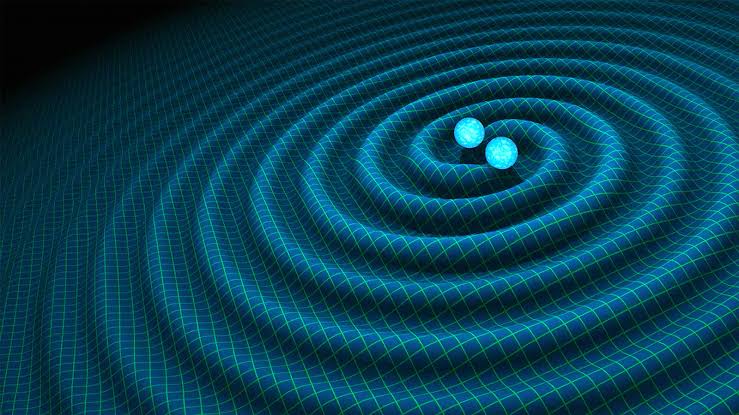
At the grandest, most profound scale of reality exist gravitational waves, which can be thought of as the literal vibrations of spacetime itself. First predicted by Albert Einstein in his 1915 Theory of General Relativity, these elusive cosmic frequencies were finally detected directly in 2015 by the Laser Interferometer Gravitational-Wave Observatory (LIGO). When hyper-dense celestial titans—such as binary black holes or colliding neutron stars—undergo violent orbital decay, they radiate energy outward, warping the very fabric of the universe like ripples moving across the surface of a pond. Traveling at the speed of light, these waves squeeze and stretch the coordinates of space, acting as a revolutionary new form of cosmic frequency that allows astrophysicists to literally "hear" cataclysmic events that occurred billions of light-years away, completely independent of traditional light-based telescopes.
While gravitational waves ripple through the vacuum of space, sound waves require a physical medium to transmit their mechanical energy. Sound waves are longitudinal pressure frequencies that propagate through solids, liquids, and gases via the sequential compression and rarefaction of atoms. When a physical object vibrates, it transfers its kinetic energy to surrounding air molecules, creating an acoustic wave packet that travels outward. This mechanical frequency spectrum governs our entire sensory relationship with our immediate ecosystem—from the complex, delicate linguistic syntax of human conversation to the deep-frequency infrasound used by elephants to communicate across kilometers of dense African savanna. Sound waves represent the vital bridge where raw kinetic movement is transformed into rich sensory information, mapping the acoustic properties of the terrestrial world.
As we pivot from external physical environments inward to human biology, we encounter brain waves—the complex, electro-chemical frequencies that orchestrate our conscious reality. Within the human brain, billions of individual neurons constantly communicate with one another using tiny, coordinated electrical impulses. When vast networks of these cells fire in perfect synchrony, they generate rhythmic electrical fields known as neural oscillations, which can be measured across distinct frequency bands using an Electroencephalogram (EEG). These biological frequencies serve as the underlying foundation for our changing states of consciousness, dictating whether we are actively solving a complex mathematical equation, daydreaming, or slipping into deep, restorative sleep.
The neural spectrum is divided into specific, highly categorized frequency bands, each uniquely mapped to human behavior. At the highest end sit Gamma waves (30 to 100 Hz), which are responsible for high-level cognitive processing, memory consolidation, and moments of sudden, creative insight. When you are alert and intensely focused on an analytical task, your brain operates primarily on Beta waves (12 to 30 Hz). Conversely, winding down at the end of a stressful day shifts your brain chemistry into Alpha waves (8 to 12 Hz), a relaxed, reflective state often enhanced by deep meditation. As you drift closer to sleep, Theta waves (4 to 8 Hz) take over, unlocking a dream-heavy state of consciousness, before finally plunging into Delta waves (0.5 to 4 Hz)—the slow, deep-sleep frequencies where the body physically repairs its tissues and resets its neural pathways.
The striking parallelism between these cosmic, mechanical, and biological frequencies reveals a profound philosophical truth about the universe. Whether analyzing the rhythmic 0.5 Hz pulse of a human brain in deep sleep, the 20,000 Hz upper limit of human hearing, or the ultra-low millihertz frequencies of colliding galactic cores, oscillation remains nature's universal mechanism for transferring data. Energy, at every single metric scale of the cosmos, manifests as a wave form. By learning to tune our scientific instruments to these varied channels, we are gradually shifting away from viewing the universe as a chaotic collection of separate entities, and instead beginning to appreciate it as a singular, beautifully synchronized cosmic symphony.
Ultimately, decoding the spectrum of universal frequencies bridges the ancient divide between physics and human experience. It shows that the very same laws of harmony and vibration that govern the vast, dark abysses of interstellar space are mirrored perfectly inside the organic neural pathways of the human mind. As next-generation quantum sensors, advanced gravitational wave interferometers, and brain-computer interfaces continue to mature, humanity will unlock the ability to listen to these hidden rhythms with unprecedented clarity, opening up a brand-new frontier of scientific discovery and spiritual connection to the vibrant, vibrating cosmos we call home.