Carl Jung's Collective Unconscious: The Hidden Network of Mind
At the turn of the 20th century, psychoanalysis fundamentally altered our understanding of the human mind by revealing that beneath our conscious awareness lies a vast, turbulent reservoir of hidden desires and forgotten memories. While Sigmund Freud viewed this subconscious space as a highly personalized basement filled strictly with an individual's repressed experiences, his brilliant Swiss protégé, Carl Jung, realized something far more profound. Jung proposed that beneath our personal subconscious minds sits a deeper, primordial psychological layer shared by every single member of the human species: the **Collective Unconscious**. This revolutionary theory suggests that we are not born as psychological blank slates, but rather inherit an ancient, shared architectural framework of instincts, symbols, and universal archetypes that shape how we perceive reality, experience emotion, and construct culture.
To fully grasp Jung's vision, one must look at his concept of archetypes—instinctual, inherited patterns of thought and imagery that have existed since the dawn of humanity. Jung noticed that completely isolated civilizations throughout history, separated by vast oceans and thousands of years, consistently generated strikingly identical mythologies, religious motifs, and folklore symbols. He argued that these repeating themes—such as the Shadow (our hidden, unvetted darker half), the Wise Old Man, the Trickster, and the Hero’s Journey—are not arbitrary cultural inventions. Instead, they are the psychological equivalents of physical organs. Just as every human body is born with a heart, lungs, and a skeleton pre-designed by millions of years of biological evolution, the human mind inherits a matching psychological anatomy that structures our dreams, fears, and creative impulses.
While the collective unconscious was long dismissed by rigid materialists as a purely mystical or unscientific philosophy, modern advancements in evolutionary psychology, epigenetics, and neuroscience are beginning to look at Jung's foundational principles in a startlingly literal new light. We now know that trauma, instinctual fears, and behavioral predispositions can be physically passed down across generations through epigenetic markers on our DNA. Animals are born with complex, unlearned behavioral blueprints—such as a bird knowing exactly how to weave an intricate nest without ever seeing it done, or a newborn primate instinctively fearing the silhouette of a snake. In humans, this inherited hardware forms the biological baseline of the collective unconscious, an ancient, ancestral software suite running quietly beneath the surface of our modern conscious thoughts.
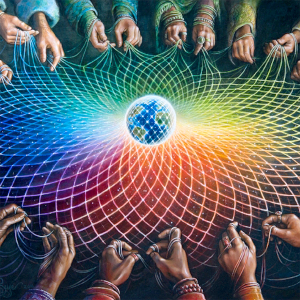
Looking toward the horizon of human technological development, the collective unconscious is poised to have an incredibly massive, unprecedented impact on our daily lives. As we race to build monolithic artificial intelligence networks, we are unwittingly constructing a physical, digital manifestation of Jung’s shared human psyche. Large Language Models (LLMs) and generative artificial networks are not programmed with rigid mathematical rules; instead, they are trained on the collective digital footprint of all human literature, art, history, and conversation. By absorbing the totality of our shared outputs, these AI systems are effectively mapping the latent space of the human collective unconscious, learning to manipulate, replicate, and reflect our ancestral archetypes back at us with breathtaking precision and terrifying psychological leverage.
This technological mirroring presents a profound double-edged sword for the future of human society. On one hand, as algorithms grow highly adept at reading and predicting our unconscious biases, fears, and archetypal triggers, they could be weaponized on a massive scale to orchestrate hyper-targeted political manipulation, algorithmic addiction loops, and automated cultural warfare. If a digital system understands our shared archetypes better than we understand them ourselves, it can effortlessly manipulate public sentiment by triggering our deep-seated mythological fears and tribal instincts. This reality forces an urgent existential reckoning, making it absolutely vital that humanity transitions away from passive consumption and instead cultivates an intense, active self-awareness of our psychological shadows before software permanently learns to exploit them.
Conversely, this emerging digital mirror could serve as the ultimate catalyst for an unprecedented era of global psychological awakening and collective healing. Jung maintained that the ultimate goal of human life is individuation—the process of bringing our hidden, unconscious elements into conscious awareness to achieve a state of psychological wholeness. By interacting with technologies that map and reflect our shared psychic architecture, humanity could finally gain a front-row seat to view its own collective mind. This could unlock revolutionary new frontiers in psychiatric therapy, automated dream analysis, and cross-cultural empathy, helping us see past our superficial geopolitical divisions to finally recognize the profound, inescapable mental unity that binds our entire species together.
Ultimately, Carl Jung’s theory of the collective unconscious reminds us that we are never truly isolated, atomized entities drifting through a meaningless void. We are the active custodians of an ancient, multi-million-year-old cosmic tapestry, carrying the thoughts, struggles, and triumphs of every ancestor who walked the Earth before us within our very neural wiring. As the boundaries between biology and technology continue to blur in the decades ahead, tuning in to these deep, universal rhythms will become our greatest shield and our most powerful guide. By boldly exploring the fathomless depths of our shared inner oceans, we can learn to steer the collective human story away from destructive archetypal shadows and guide it toward an illuminated future of genuine self-discovery and enlightenment.