Biological Marvels: Mind-Boggling Stats and Facts of the Animal Kingdom
Human beings have built sprawling megacities, engineered complex global data networks, and pushed our scientific instruments into the dark abysses of deep space. Because of our massive technological triumphs, it is remarkably easy to fall into the trap of believing that humanity represents the absolute pinnacle of engineering on Earth. However, stepping away from our concrete jungles and looking toward the natural world reveals a radical biological frontier that effortlessly outpaces our most advanced machinery. Biological Marvels: Mind-Boggling Stats and Facts of the Animal Kingdom pulls back the canopy on the wildest corners of nature to showcase the jaw-dropping adaptations, extreme sensory metrics, and evolutionary superpowers of the creatures that share our planet. From deep-sea depths to the microscopic air currents around us, the animal kingdom operates on a scale of raw physical capability that defies imagination.
To fully appreciate the sheer scale of evolutionary engineering, one must look directly at the physical superlatives dominating our oceans and continents. The blue whale (Balaenoptera musculus) stands as a monument to biological mass, reigning as the largest known animal to have ever existed on Earth—comfortably eclipsing even the most gargantuan prehistoric dinosaurs. Reaching lengths of up to 30 meters and weighing an astonishing 170 metric tons, its individual organs operate on a scale that strains human comprehension. A blue whale's tongue alone can weigh as much as an entire adult African elephant, while its massive, muscular heart is roughly the size of a standard hatchback car. When this aquatic titan chooses to feed, it can swallow up to 500,000 calories of tiny krill in a single, massive gulp, utilizing a biological architecture that pushes the absolute boundaries of physical growth.
While the blue whale dominates the macro-scale of our planet, the miniature world of insects showcases an equally jaw-dropping display of absolute structural power. Consider the dung beetle (specifically Onthophagus taurus), an inconspicuous creature that claims the crown as the strongest animal on Earth relative to its body weight. This relentless insect is capable of pulling a load that is an incredible 1,141 times its own body mass. To put this mind-boggling statistic into a human perspective, this is the exact mechanical equivalent of an average human being successfully pulling six fully loaded, double-decker public transit buses entirely by themselves. This staggering feat of raw strength is made possible by highly specialized exoskeletal muscle attachments that allow insects to exert massive forces that put human athletic records to absolute shame.
As we transition from raw physical strength to the arena of specialized sensory perception, the animal kingdom reveals capabilities that function exactly like science fiction superpowers. The mantis shrimp, a small marine crustacean inhabiting tropical coral reefs, possesses arguably the most complex visual system ever discovered by modern science. While a human being views the world using three distinct types of photoreceptor cells in their eyes—allowing us to perceive the standard RGB color spectrum—the mantis shrimp utilizes an incredible array of 16 separate photoreceptors. This hyper-advanced biological hardware allows them to see fields of multispectral light completely invisible to humans, including deep ultraviolet, infrared, and both linear and circular polarized light, turning their visual experience into an incomprehensibly rich, multi-layered matrix of cosmic color.
The weaponry deployed by these reef-dwelling predators is equally shocking, testing the absolute laws of fluid dynamics. When a mantis shrimp strikes its prey, it snaps its specialized raptorial appendages forward with a blistering acceleration that matches the speed of a fired .22 caliber bullet from a handgun. Moving at speeds exceeding 80 kilometers per hour through the water, the strike generates an explosive force of roughly 1,500 newtons in less than three milliseconds. This movement is so incredibly fast that it instantly shears the surrounding water molecules apart, creating a phenomenon known as a cavitation bubble. When these tiny vapor bubbles collapse, they generate a massive acoustic shockwave, a momentary flash of light, and localized temperatures that briefly mirror the surface of the Sun, effortlessly shattering the thick shells of crabs and snails on impact.
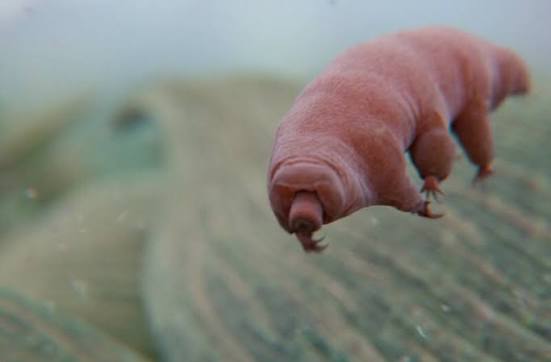
Even our familiar understandings of mortality, cellular aging, and survival boundaries are completely rewritten when observing nature's most resilient organisms. The tardigrade, a microscopic eight-legged creature affectionately known as the water bear, is practically indestructible. To survive hostile environments, the tardigrade enters a state of profound suspended animation called cryptobiosis, expelling 99% of the water from its body and pausing its metabolism entirely. In this bulletproof state, tardigrades can easily survive direct exposure to the crushing vacuum and intense cosmic radiation of outer space, withstand freezing temperatures down to -272°C, and survive intense pressures six times greater than those found at the deepest trenches of our oceans, waiting decades for a single drop of water to instantly revive them.
Ultimately, exploring these mind-boggling statistics and facts of the animal kingdom provides humanity with a deep sense of humility and renewed curiosity. Every bizarre adaptation—whether it is the immortal cellular regeneration of the Turritopsis dohrnii jellyfish or the high-frequency echolocation loops used by bats to map the dark in total darkness—reminds us that nature has spent millions of years solving complex engineering problems that we are only just beginning to understand. By preserving the delicate biospheres that nurture these incredible evolutionary marvels, we safeguard an irreplaceable library of biological wisdom. As our field researchers and geneticists continue to decode these natural systems, the wonders of the wild world will continue to serve as our greatest source of scientific inspiration and profound environmental respect.