Finding Life - What will it mean for us?
For millennia, humanity has stared up at the starlit sky and wrestled with an agonizing, fundamental question: Are we alone in the dark void of the cosmos? While this inquiry was once the exclusive domain of late-night philosophers and speculative science fiction writers, modern astrobiology has turned it into a rigorous, imminent scientific pursuit. With advanced telescopes probing the chemical composition of distant exoplanets and robotic rovers searching for microbial signatures in our own celestial backyard, the discovery of alien biology is fast becoming a matter of "when" rather than "if." Finding Life - What will it mean for us? explores the profound ripple effects that this monumental breakthrough will have on human civilization, tracing how a single piece of cosmic data will fundamentally rewrite our science, philosophy, religion, and collective identity forever.
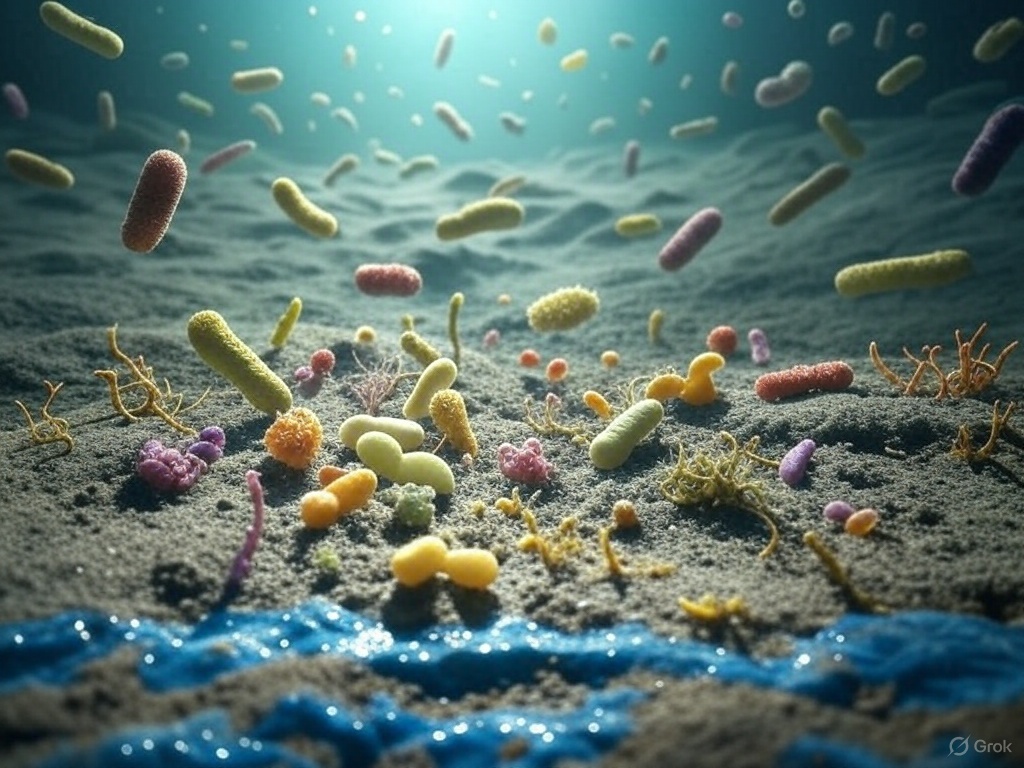
To appreciate the immense scientific significance of discovering extraterrestrial life, we must first recognize that all life on Earth shares a single, localized genetic origin. From the simplest deep-sea hydrothermal bacteria to the complex neural pathways of the human brain, every organism on our planet relies on the exact same structure of DNA, RNA, and amino acids. This biological uniformity leaves us with a massive scientific blind spot: we currently have a sample size of exactly one. Finding a independent "Second Genesis" of life—even if it is merely primitive, single-celled organisms frozen beneath the icy crust of Jupiter’s moon Europa or buried in the sub-surface brines of Mars—will instantly revolutionize the biological sciences. It will finally allow us to separate the universal laws of life from the specific, accidental chemical quirks of Earth's evolutionary history.
The immediate scientific revelation of such a discovery will be the realization that life is not a miraculous, hyper-rare anomaly, but an intrinsic, inevitable cosmic imperative. If life can spring up independently on two separate worlds within a single solar system, it logically implies that the universe is absolutely teeming with biological activity. Astronomers will be able to confidently extrapolate that a significant percentage of the billions of Earth-like exoplanets spinning across the Milky Way galaxy are home to active, evolving ecosystems. This data will completely shift our planetary exploration priorities, transforming astrobiology from a speculative search for needles in a cosmic haystack into a massive, systematic effort to map, categorize, and deeply understand the diverse alien biospheres operating across our galactic neighborhood.
Beyond the laboratory walls, the confirmation of alien life will trigger a profound, irreversible existential shockwave across human philosophy and theology. For centuries, our cultural and religious institutions were built upon a deeply entrenched foundation of geocentrism and anthropocentrism—the comforting belief that Earth is the literal center of the universe and that humanity holds a completely unique, divinely ordained monopoly on consciousness. While Copernicus and Darwin historically nudged us away from the center of the physical stage, the discovery of extraterrestrial life will permanently displace us. Major world religions will be forced to adapt their theological frameworks to accommodate a grander, more inclusive cosmos, wrestling with deep questions regarding whether alien species possess souls, experience spiritual salvation, or share in a universal divine architecture.
Of course, the psychological and societal impact of this discovery will depend entirely on the specific nature of the life we find. Detecting a passive, microscopic biosignature in the atmosphere of a gas giant 100 light-years away will feel vastly different from receiving an intentional, highly structured radio signal from an advanced, intelligent civilization. The discovery of a non-human technological intelligence would introduce a jarring, humbling reality: we may no longer be the smartest entities in the room. Confronting a civilization that could potentially be millions of years more advanced than our own will force humanity to confront its own technological immaturity, potentially inspiring a rapid acceleration in our own scientific development, artificial intelligence safety, and long-term interstellar communication strategies.
Paradoxically, the greatest consequence of looking out into the cosmos and finding alien life is that it will radically change how we look at ourselves. Throughout history, human populations have been bitterly divided by superficial geopolitical borders, cultural differences, and tribal conflicts. However, when contrasted against the vast, exotic tapestry of an inhabited universe, the petty rivalries that consume our daily lives will instantly lose their power. Confronting an external, alien "Other" will act as a powerful cosmic mirror, forcing us to recognize that whatever our internal disagreements may be, we are all ultimately part of a singular, fragile, and deeply interconnected terrestrial family. The discovery will provide a powerful catalyst for global unity, reminding us that we are the collective caretakers of a precious blue oasis.
Ultimately, finding extraterrestrial life will mark the official end of humanity’s cosmic childhood. It will shatter the profound loneliness that has characterized our lonely tenure on this planet, transitioning our species into a grander, more mature era of galactic awareness. Whether the universe greets us with the quiet, ancient rustle of alien microbes or the profound, complex transmissions of a distant super-civilization, the confirmation that we are not alone will serve as a ultimate testament to human curiosity. By pushing our eyes and instruments deep into the cosmic dark, we will finally bridge the gap between our isolated home world and the vibrant, living universe that has been waiting for us to find it since the dawn of time.