Cosmic Real Estate: Mind-Boggling Stats and Facts of Our Solar System
We spend our entire lives walking the surface of Earth, completely accustomed to its predictable 24-hour days, gentle seasonal shifts, and life-sustaining atmosphere. Because this environment is all we have ever known, it is easy to assume that the rest of our celestial neighborhood follows a similar baseline. However, stepping off our home world reveals an exotic planetary frontier governed by extreme physics, bizarre orbital mechanics, and mind-boggling scales. Cosmic Real Estate: Mind-Boggling Stats and Facts of Our Solar System compiles the most jaw-dropping planetary statistics and astronomical anomalies that redefine our understanding of reality. By analyzing the raw data of Earth alongside its neighboring worlds, we uncover a cosmos that is far more beautiful, violent, and strange than anyone could possibly imagine.
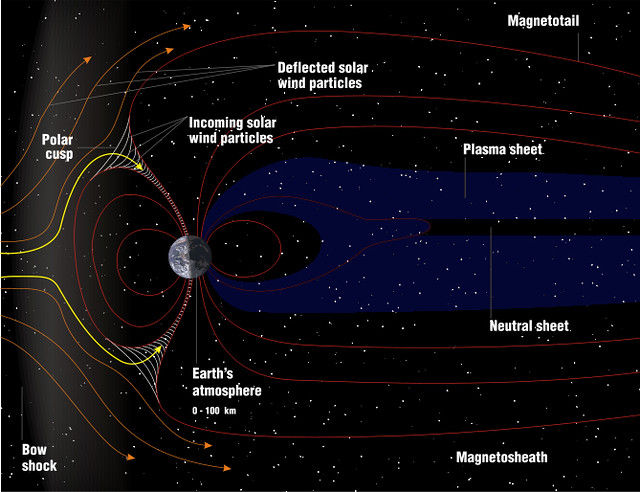
To truly appreciate the unique nature of our home planet, we must first examine Earth’s foundational metrics through a comparative astronomical lens. Spinning through the void at a blistering 107,000 kilometers per hour, Earth is the densest planet in the solar system, boasting a metric density of 5.51 grams per cubic centimeter. It is perfectly positioned within the Sun’s "Goldilocks Zone"—the precise orbital band where temperatures allow liquid surface water to exist without instantly boiling or permanently freezing. Earth is also structurally shielded by a powerful magnetosphere generated by a churning, molten iron core located 2,900 kilometers beneath our feet. This invisible magnetic canopy continuously deflects deadly solar radiation, working in tandem with our nitrogen-oxygen atmosphere to preserve the only active global biological ecosystem known to modern science.
When we venture inward toward the blinding heat of the Sun, our familiar planetary benchmarks disintegrate completely. Consider Venus, a world that serves as a terrifying cosmic warning about the power of atmospheric composition. Though it is roughly the same physical size as Earth, Venus features a runaway greenhouse effect driven by a suffocating 96% carbon dioxide atmosphere. This atmospheric blanket is so incredibly dense that the atmospheric pressure on the Venusian surface is 92 times greater than Earth's—equivalent to the crushing hydraulic pressure found one kilometer deep beneath our terrestrial oceans. Trapping solar energy with inescapable efficiency, Venus maintains a global surface temperature of 465°C, making it significantly hotter than Mercury, despite Mercury being twice as close to the solar fire.
The temporal metrics of these inner worlds are equally bizarre, completely upending our basic concepts of time and calendars. Because Mercury experiences intense gravitational braking due to its extreme proximity to the Sun, its rotational speed is incredibly slow. A single day on Mercury—the time it takes to rotate once on its axis—lasts for roughly 59 Earth days, while its rapid orbital transit around the Sun takes just 88 Earth days. Venus boasts an even more radical temporal distortion: it takes 243 Earth days to complete a single axial rotation, but only 225 Earth days to complete a full trip around the Sun. This means a single day on Venus is technically longer than its entire year. Furthermore, Venus rotates in the opposite direction of almost every other planet, meaning a visitor standing on its scorching plains would watch the sun rise in the west and set in the east.
As we cross the Asteroid Belt into the domain of the outer gas giants, the sheer structural scale of our solar system expands to incomprehensible proportions. Jupiter sits as the absolute king of these worlds, a titanic sphere of hydrogen and helium so incredibly massive that it contains more than twice the mass of all the other planets, moons, and asteroids combined. If Jupiter were hollow, more than 1,300 Earths could be comfortably packed inside its volume. Despite its gargantuan size, Jupiter possesses the fastest rotational speed in the solar system, completing a full day in just 9 hours and 56 minutes. This furious spinning kinetic energy creates powerful atmospheric drag, whipping its colorful ammonium hydrosulfide clouds into violent, permanent super-storms like the Great Red Spot—a roaring hurricane wider than the entire planet Earth that has been observed for over 300 years.
Sailing past Jupiter brings us to Saturn, a world that challenges our fundamental understanding of density and matter. While universally celebrated for its spectacular, sprawling ring system made of billions of individual water-ice particles, Saturn is the least dense planet in our cosmic neighborhood. Its average density is a mere 0.69 grams per cubic centimeter, which is actually less than the density of water. Statistically, if you could construct a bathtub vast enough to hold it, the entire planet Saturn would easily float on the surface like a massive beach ball. Yet, what it lacks in density, it makes up for in celestial satellites; Saturn claims a staggering 146 confirmed moons, including Titan, a giant moon that possesses its own thick nitrogen atmosphere and flowing rivers of liquid methane.
The outermost boundary of our primary planetary system is anchored by the ice giants, Uranus and Neptune, worlds forged from deep reservoirs of water, ammonia, and methane ices. Uranus stands out as the ultimate non-conformist of the solar system due to its radical 98-degree axial tilt. Likely struck by an Earth-sized protoplanet during its early formation, Uranus rotates completely on its side, rolling around the Sun like a cosmic bowling ball and plunging its poles into alternating 42-year periods of continuous darkness and sunlight. Its twin, Neptune, experiences the most violent weather conditions in the known universe. Driven by an intense internal heat signature, Neptune’s deep-blue atmosphere is a chaotic cauldron of supersonic winds that whip across the planet at speeds exceeding 2,100 kilometers per hour—twice the speed of sound and faster than the top speed of a fighter jet.
Ultimately, analyzing these incredible planetary facts provides humanity with a profound sense of perspective, transforming how we view our place in the cosmos. When we contrast the freezing, methane-swept expanses of Neptune, the crushing atmospheric furnaces of Venus, and the radiation-blasted deserts of Mercury against our own world, we realize that Earth is an extraordinarily rare, fragile paradise. Every statistic pointing to the hostile extremes of outer space highlights how perfectly calibrated our planet is to support the grand tapestry of human civilization. As our spacecraft continue to push deeper into the void, gathering clearer data from these exotic frontiers, the marvels of our solar system will continue to fuel our collective curiosity, reminding us that we live in a deeply fascinating cosmic backyard waiting to be explored.