Plato and Socrates
The foundations of Western philosophy were forged in the bustling public marketplaces and olive groves of ancient Athens through one of history’s most influential intellectual partnerships: the bond between Plato and Socrates. Operating in the fifth century BCE, Socrates did not leave behind a single written word, choosing instead to treat philosophy as a living, breathing activity practiced through intense dialogue. What we know of his revolutionary thought survives almost entirely because his most brilliant student, Plato, meticulously recorded and dramatized his teacher's philosophical conversations. Together, they radically redirected the course of human thought away from speculative natural science and turned it inward toward the human soul, asking timeless, razor-sharp questions about the nature of justice, virtue, piety, and truth.
Socrates’ philosophical method was fundamentally disruptive to the established Athenian status quo. Rather than delivering grand, rhetorical lectures like the commercial Sophists of his day, he pioneered what is now known as the Socratic Method, or elenchus. He would wander through the Agora, approaching powerful politicians, celebrated poets, and respected military generals, feigning total ignorance before asking deceptively simple questions like, "What is justice?" As the conversation unfolded, Socrates would use logical cross-examination to systematically expose the contradictions, unexamined assumptions, and deep intellectual vanity of his interlocutors. While this process aimed to uncover genuine, objective truth, it predictably humiliated the ruling elite and earned Socrates a fiercely antagonistic reputation among the city's political establishment.
While the older elite viewed Socrates with growing resentment, the aristocratic young men of Athens were utterly captivated by his eccentric brilliance, poverty, and fearless pursuit of truth. Among these young followers was Plato, who watched his mentor bypass the superficial values of material wealth and political power to focus entirely on the moral health of the soul. Plato recognized that Socrates was offering a radical new blueprint for human life—one centered on the famous maxim that "the unexamined life is not worth living." Under Socrates’ guidance, Plato and his peers learned to question tradition, deconstruct the dogmatic decrees of the state, and value rigorous dialectical reasoning above civic compliance, inadvertently setting the stage for a dramatic, fatal confrontation with the Athenian democracy.
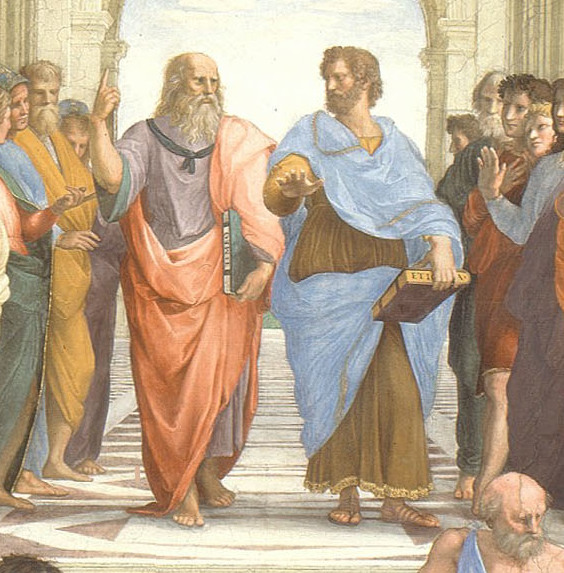
The delicate tension between Socrates and the state finally snapped in 399 BCE, a turbulent period when a newly restored Athenian democracy was deeply paranoid following its humiliating defeat in the Peloponnesian War. Seeking a scapegoat for the city's moral and political decline, three prominent citizens brought formal, capital charges against the seventy-year-old philosopher. Socrates was dragged before a citizen jury of 501 Athenians, facing two severe and intertwined indictments: impiety against the traditional gods of the city-state by introducing novel deities, and, most famously, the grave charge of allegedly "corrupting the youth" of Athens by teaching them to question authority.
Plato immortalized this high-stakes trial in his famous dialogue, the Apology. Rather than begging the jury for mercy or using standard legal rhetoric to placate his accusers, Socrates remained defiantly committed to his philosophical mission. He boldly claimed that he was actually a divine gift to Athens—a philosophical "gadfly" sent by the gods to sting a lazy, complacent state into active moral awareness. When the narrow majority voted to convict him, Socrates refused to suggest a realistic alternative punishment like exile, arguing instead that the city should reward him with free meals for life. This unrelenting commitment to his principles sealed his fate; the irritated jury voted by an even larger majority to condemn him to death.
The tragic culmination of this philosophical journey unfolded inside a dark Athenian prison cell, as detailed in Plato’s heartbreaking dialogue, the Phaedo. Although wealthy friends like Crito arranged a flawless escape plan, Socrates calmly refused to flee, arguing that to break the laws of the state simply because they had ruled against him would be an act of injustice that would corrupt his own soul. He maintained that a true philosopher must never return an injustice for an injustice. Surrounded by weeping disciples, including a devastated Plato, Socrates maintained perfect psychological composure. He willingly took the cup of state-mandated hemlock, drank the poison, and took his own life to uphold the absolute integrity of his teachings.
The state-sanctioned execution of Socrates left an indelible, transformative scar on Plato, permanently shattering his faith in democracy and steering him away from a career in Athenian politics. In response to the tragedy, Plato founded the Academy—the Western world's first institution of higher learning—and dedicated his life to building a monumental philosophical system. He used the memory of his martyred teacher to construct the Republic, imagining an ideal society ruled not by volatile, easily manipulated crowds, but by enlightened philosopher-kings. Ultimately, by attempting to silence a single critical voice for "corrupting the youth," Athens accidentally immortalized him, transforming Socrates into philosophy’s ultimate martyr and inspiring Plato to build an intellectual empire that would shape human civilization for millennia.