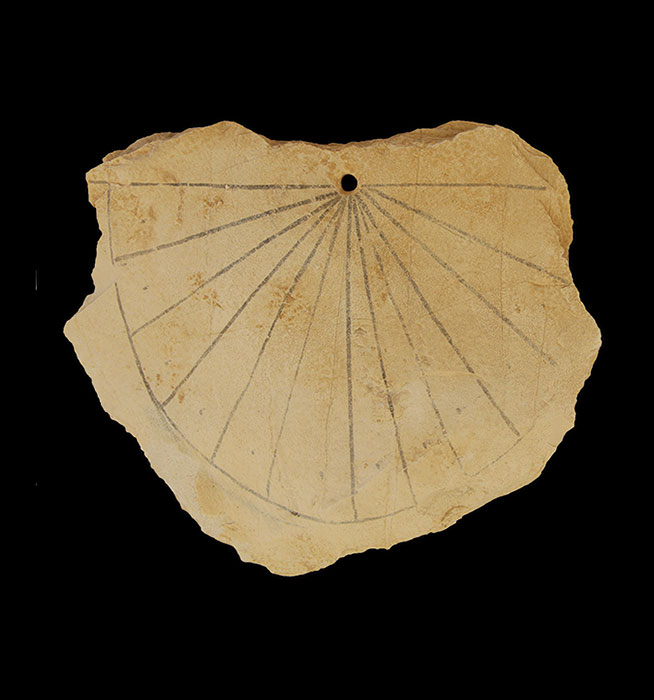
Earliest Known Sundial Made in Egypt
Around 1500 BCE, the earliest known sundial emerged in Egypt, a groundbreaking invention that transformed how humanity measured time by harnessing the sun’s predictable journey across the sky. Known as a shadow clock, this device consisted of a vertical stick or obelisk—called a gnomon—planted in the ground, casting a shadow onto a flat surface marked with lines to denote hours. Unearthed artifacts, such as the sundial from the Valley of the Kings, reveal a simple yet ingenious design: a T-shaped bar with hour markers that tracked daylight from sunrise to sunset. This allowed the ancient Egyptians to divide their day into manageable segments, aligning their religious rituals, agricultural tasks, and civic duties with the sun’s rhythm. The sundial’s creation reflects not only their practical ingenuity but also their deep connection to celestial patterns, a testament to their advanced observational skills honed through centuries of stargazing along the Nile.
The impact of this invention rippled far beyond Egypt’s borders, laying the foundation for timekeeping innovations across cultures and eras. Unlike water clocks, which were less portable and weather-dependent, the sundial offered a reliable, sun-powered alternative that required no maintenance beyond a clear sky. Its design evolved over time—Greeks later refined it into the hemicycle, adjusting for seasonal shadow shifts, while Romans crafted portable versions for their legions and merchants. In Egypt, sundials were often monumental, with towering obelisks like those at Karnak serving dual purposes as timekeepers and symbols of divine power, their shadows aligning with temple axes during solstices. This integration of science and spirituality underscores how timekeeping was not just functional but sacred, linking daily life to the cosmic order. By standardizing time, the sundial also facilitated coordination in a civilization where precision in planting crops during the Nile’s flood season could mean the difference between abundance and famine.
Today, the sundial stands as a monument to human curiosity and adaptability, a reminder of a time when technology was born from observing nature rather than dominating it. In an age of atomic clocks and GPS, it’s easy to overlook the sundial’s elegance—yet its legacy endures in every clock face divided into hours, a direct descendant of those ancient Egyptian markers. It challenges us to consider how we measure our days: not just in minutes, but in harmony with the world around us. The sundial’s story is one of simplicity unlocking profound change, inviting reflection on how small tools can cast long shadows across history. For the Egyptians, it was a bridge between earth and sky; for us, it’s a window into a past where time was a dance with the sun, not a race against it.