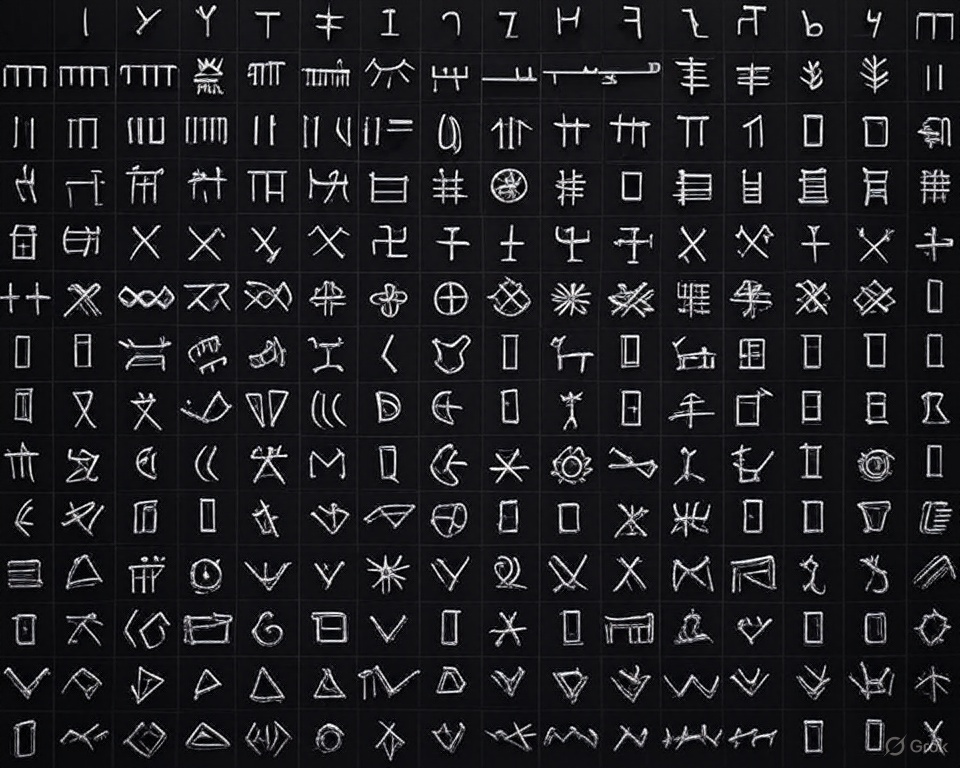
Humans Begin Using Symbols to Represent Words
By 6000 BCE, in the bustling region of Mesopotamia, humans took a monumental step forward by using symbols to represent words, laying the groundwork for written language. This early system, known as proto-writing, began with pictographs—simple drawings representing objects like grain or livestock—used primarily for record-keeping in trade and agriculture. Over time, these symbols evolved to represent sounds and abstract concepts, a precursor to the cuneiform script developed later.
This innovation had a cascading effect: it allowed merchants to track goods, priests to record rituals, and rulers to document laws, creating a permanent memory beyond oral tradition. Sites like Uruk reveal clay tablets with these symbols, showing tallies of goods and early administrative records. This shift enabled societies to grow more complex, as information could be stored and shared across generations and distances, fostering the development of bureaucracy, science, and storytelling—evidenced later by works like the *Epic of Gilgamesh*.
For us, this milestone underscores the transformative power of communication. It’s the root of everything from books to the internet, showing how capturing ideas in a tangible form can propel civilization forward. It’s a reminder that our ability to connect through language, even in its simplest forms, is a cornerstone of human progress.