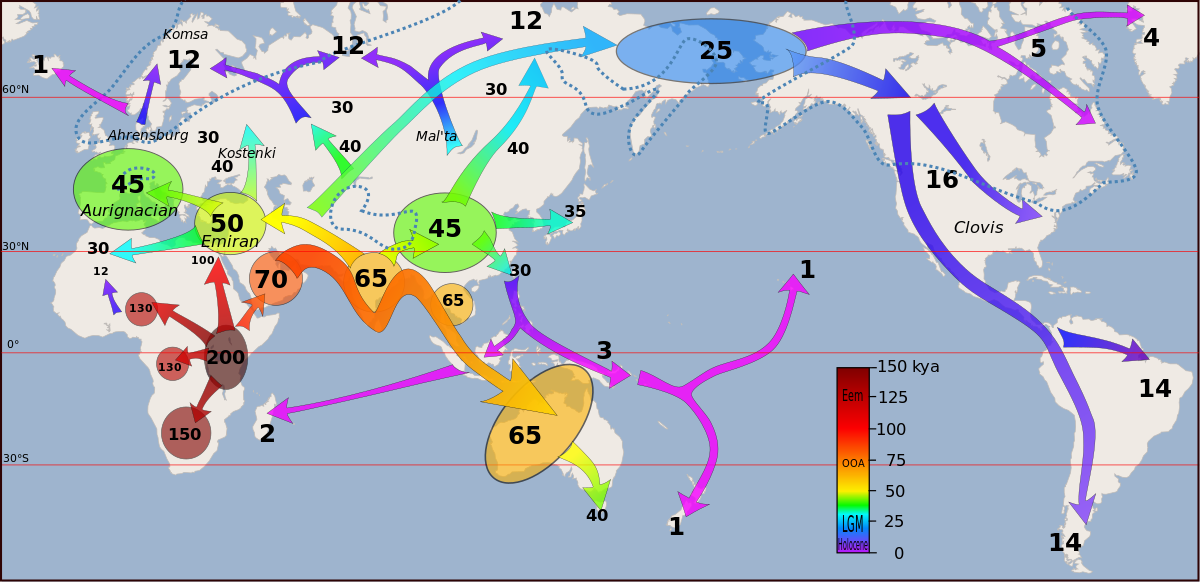
Humans Reach the Americas
Around 15,000 years ago, *Homo sapiens* reached the Americas, likely crossing the Beringia land bridge from Siberia to Alaska during a period of low sea levels. Archaeological sites like Monte Verde in Chile and Clovis in New Mexico reveal stone tools and human activity, indicating rapid dispersal across the continents. This migration marked the final major step in humanity’s global expansion.
These early Americans adapted to diverse environments, from Arctic tundras to tropical forests, developing specialized hunting techniques, such as Clovis points for megafauna like mammoths. Their journey required resilience, navigational skills, and cooperation, establishing the foundations for the rich cultural diversity of Indigenous American societies. This colonization highlights *Homo sapiens*’ unparalleled ability to inhabit every corner of the globe.
Archaeologists and geneticists study these migrations to trace the peopling of the Americas, revealing connections between ancient and modern populations. For modern readers, this milestone underscores the deep history of the Americas and the ingenuity of its first inhabitants. It celebrates humanity’s exploratory spirit, which continues to drive discovery and adaptation today.