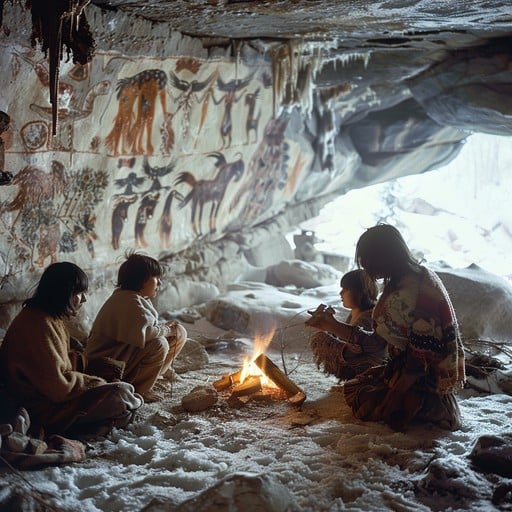
Modern Humans Evolve in Africa
Around 300,000 years ago, anatomically modern humans (*Homo sapiens*) emerged in Africa, as shown by fossils from Jebel Irhoud, Morocco, displaying modern facial features and braincase shapes. These early *Homo sapiens* had larger brains, smaller teeth, and more delicate skeletons than their predecessors, adaptations that supported advanced cognition and social behavior. This evolution marked a critical turning point, paving the way for humanity’s eventual spread across the globe.
The rise of modern humans was likely influenced by environmental challenges, such as climate shifts, which favored traits like improved tool use and group cooperation. Genetic evidence, including mitochondrial DNA, traces all living humans back to African ancestors from this period, often referred to as a shared “mitochondrial Eve.” This common origin highlights the unity of humanity, despite the diverse adaptations that followed as populations migrated.
Paleoanthropologists examine these fossils to unravel what makes humans unique, exploring how physical and cognitive traits evolved together. For today’s readers, this event ties into our shared heritage and the rich tapestry of global cultures, all rooted in Africa. It positions the continent as the cradle of humanity, emphasizing its foundational role in our species’ story.