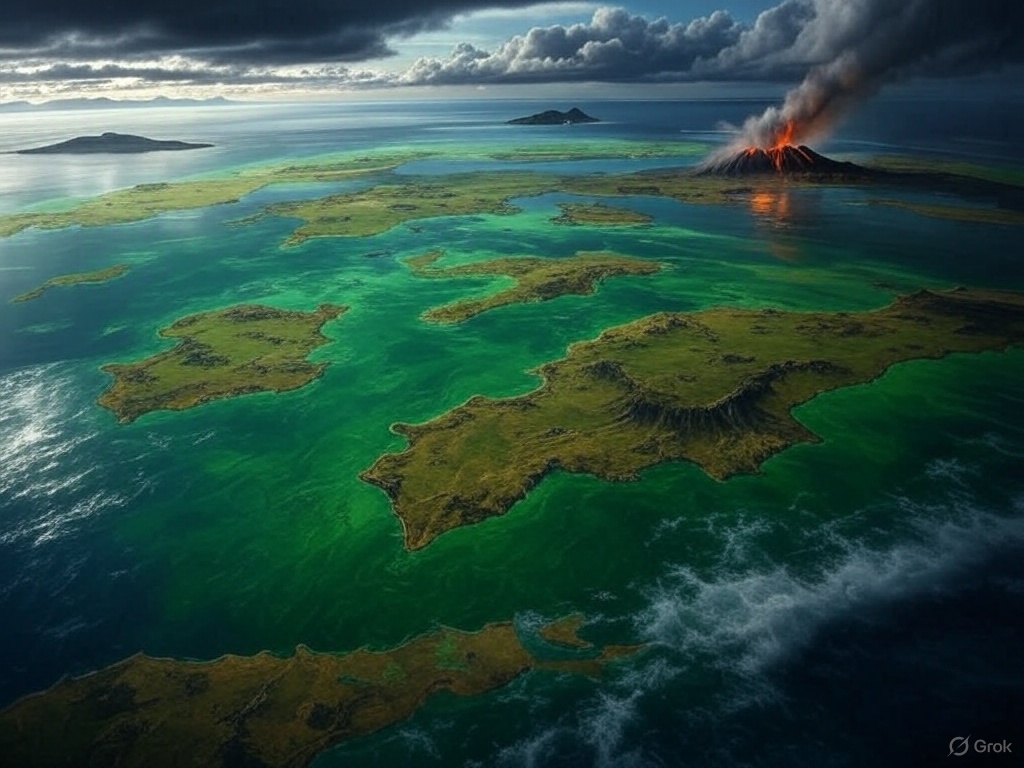
Plants Begin to Colonise the Land
Around 470 million years ago, during the Ordovician period, plants began their monumental transition from aquatic to terrestrial environments, fundamentally transforming Earth’s surface. These early plants, likely descendants of green algae, were small, non-vascular organisms resembling modern liverworts or mosses. They lacked roots and vascular tissues, relying on moist environments to absorb water and nutrients directly through their surfaces. Fossils from sites like the Rhynie Chert in Scotland reveal early plants like *Cooksonia*, which had simple, forked stems and spore-producing structures, indicating their adaptation to land. This colonization was enabled by environmental changes, including higher oxygen levels and the stabilization of soils by microbial crusts, which provided a foothold for these pioneers.
The arrival of plants on land had cascading effects on Earth’s ecosystems and climate. By photosynthesizing on a large scale, these plants increased atmospheric oxygen, making terrestrial environments more hospitable for other life forms, such as arthropods. Their growth also initiated soil formation, as decaying plant matter enriched barren substrates, creating habitats for microbes and fungi. Moreover, plants altered the global carbon cycle by absorbing carbon dioxide, potentially contributing to a cooling trend that led to the Late Ordovician glaciation. The evolution of structures like stomata (pores for gas exchange) and cuticles (waxy layers to prevent desiccation) allowed plants to thrive in drier conditions, setting the stage for the development of vascular plants in the Silurian period, which would further transform terrestrial landscapes.
The study of early terrestrial plants offers critical lessons about ecological and evolutionary resilience. Paleobotanists use fossil evidence and molecular phylogenetics to trace the genetic adaptations that enabled plants to conquer land, revealing parallels with modern plants’ responses to environmental stress. This transition also informs our understanding of planetary habitability, as the greening of land surfaces is a key factor in stabilizing climates and supporting complex life. For humanity, the legacy of these early plants is profound: their colonization laid the foundation for terrestrial ecosystems, agriculture, and the oxygen-rich atmosphere we depend on. By studying this pivotal moment, we gain insights into how life adapts to new frontiers, both on Earth and potentially on other worlds.