Achilles and Helen of Troy: The Trojan War
The timeless epics of classical antiquity are anchored by mythological figures who embody the ultimate extremes of human virtue, flaw, and desire. At the absolute apex of the Bronze Age mythos stand Achilles and Helen of Troy, two titanic figures whose fates were irrevocably woven into the bloody fabric of the Trojan War. immortalized by Homer in the Iliad, these two individuals represent the dual catalysts of the ancient world's greatest conflict. While Helen was the ethereal sparked flame—the unmatched beauty whose departure from Sparta ignited a geopolitical powder keg—Achilles was the raging inferno, a demigod warrior whose existential wrath and unmatched martial prowess determined the ultimate destruction of Troy. Together, they personify the devastating intersection of divine will, human passion, and inescapable tragedy.
To fully comprehend their roles, one must examine the divine lineage and heavy burdens that defined their mortal existences. Helen, widely heralded as the most beautiful woman in the ancient world, was no mere mortal queen; she was a daughter of Zeus, hatched from a legendary egg after the king of the gods took the form of a swan to seduce her mother, Leda. This celestial beauty was both a divine gift and an agonizing curse, making her an object of intense political rivalry across the Greek city-states. Achilles, conversely, was born of the sea-nymph Thetis and the mortal king Peleus. In a desperate bid to grant her son immortality, Thetis famously dipped the infant Achilles into the underworld river Styx, rendering his entire body invulnerable except for the singular heel by which she held him, physically anchoring his destiny to a hidden, fatal flaw.
The paths of these two mythic icons were set on a violent collision course by the infamous Judgment of Paris. When the Trojan prince Paris was tasked with choosing the fairest goddess among Hera, Athena, and Aphrodite, the goddess of love secured her victory by promising him the hand of the most beautiful mortal woman on Earth. This fateful pact led Paris straight to the palace of Sparta, where he abducted—or eloped with—Helen, breaching the sacred ancient laws of hospitality. When Helen's slighted husband, King Menelaus, invoked the sacred Oath of Tyndareus, he bound all the kings of Greece to a unified military alliance. A monolithic armada of a thousand ships set sail for the high walls of Troy, dragging a reluctant but glory-hungry Achilles away from his homeland to spearhead the ultimate punitive invasion.
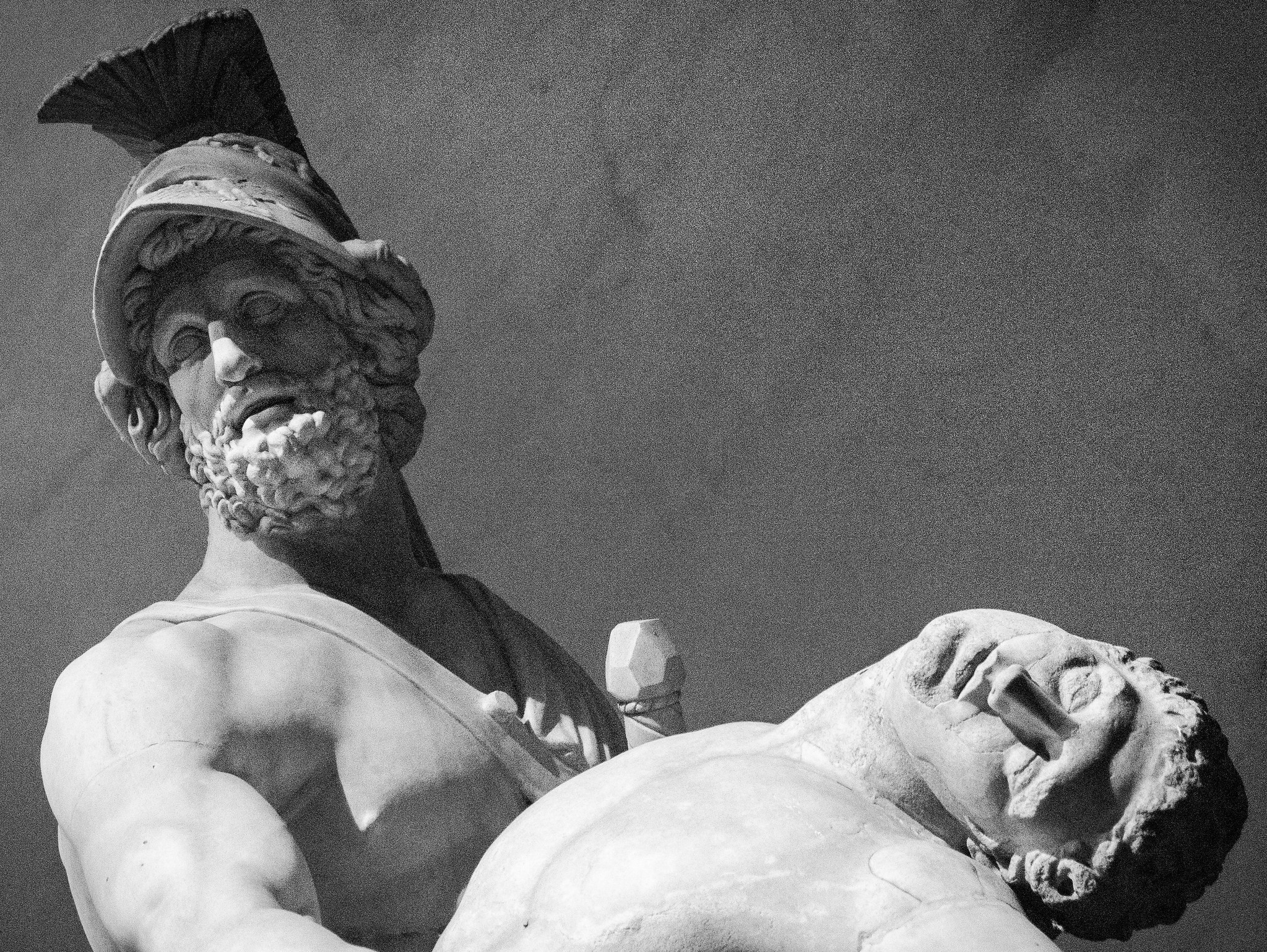
For ten grueling years, the siege of Troy dragged on, with the fates of Achilles and Helen operating on parallel but starkly different emotional horizons. Inside the besieged city, Helen lived a life of isolated grief and deep self-reproach. From the high battlements of Troy, she watched thousands of brave men perish in her name, acutely aware that her face was the direct cause of the mounting carnage. Homer depicts her not as a malicious temptress, but as a deeply complex, melancholic captive of divine engineering, torn between her affection for Paris and her profound regret for the devastation her presence brought to her adoptive Trojan family.
Outside the city walls, Achilles dominated the blood-soaked battlefield as the ultimate engine of Greek military might. However, his journey was defined not just by combat, but by an agonising existential choice. His divine mother had revealed his twin destinies: he could either choose a long, peaceful, but completely forgotten life at home, or a short, violent life at Troy that would earn him immortal glory (kleos) across millennia. Achilles actively chose the path of glory, but his resolve was shattered when his beloved companion and soulmate, Patroclus, was slain on the battlefield by the Trojan prince Hector. This profound grief transformed Achilles' pride into an unyielding, monstrous rage, driving him to slaughter Hector and drag his corpse desecrated behind his chariot, sealing his own tragic fate.
Though traditions differ on whether the two ever met face-to-face on the physical plane of Troy, late classical variations and epic fragments heavily lean into a deeply mystical connection between them. Some accounts suggest that the goddess Aphrodite and the sea-nymph Thetis arranged a secret, spectral meeting between Achilles and Helen on the slopes of Mount Ida, allowing the world's most beautiful woman and its greatest warrior to gaze upon one another away from the clamor of war. In these esoteric myths, they recognized each other as kindred spirits—both uniquely isolated by their extraordinary divine gifts, both used as pawn-pieces by manipulative Olympian gods, and both trapped within a grand cosmic tragedy beyond their personal control.
The final acts of their respective epics solidified their status as the ultimate archetypes of Western literature. Achilles met his predicted end before the fall of the city, struck down in his singular vulnerable heel by an arrow guided by Apollo. Helen survived the cataclysmic sack of Troy, her enduring grace managing to disarm Menelaus’ vengeful blade before she was brought back to Sparta to resume her throne in quiet elegance. Ultimately, the interconnected legacies of Achilles and Helen of Troy continue to captivate the human imagination because they reflect our deepest internal conflicts. They remind us that whether driven by the pursuit of absolute glory or the intoxicating pull of absolute love, our grandest human passions carry immense, irrevocable costs that echo loudly across the ages.